Every year, millions of UK drivers face the stress of a failed MOT. It is more than just an inconvenience; it is a disruption to your life and a hit to your wallet. However, the most frustrating part isn’t the cost—it’s knowing that nearly 50% of all common MOT failures could have been prevented with a simple 10-minute driveway check.
As we move into 2025 and look ahead to the stricter 2026 regulations, understanding why cars fail is your best defense. Whether it is a blown bulb or a worn tyre, these small defects can lead to a “Major” fail result.
In this guide, we reveal the top common MOT failures based on the latest DVSA statistics, provide a simple checklist to fix them at home, and explain how our “Guaranteed MOT Pass” service catches these issues before they become a problem.
1. The “Big Three” Common MOT Failures
According to official government data, three categories account for nearly half of all failures. If you check nothing else, check these.
💡 1. Lighting & Signalling (30% of failures)
Surprisingly, the #1 reason for common MOT failures is the simplest to fix: a blown bulb.
-
The Problem: Headlights, indicators, brake lights, or even the tiny number plate light not working.
-
The 2026 Context: Modern LED lights are harder to fix at home. If your LED strip flickers, it is an instant fail.
-
The Fix: Turn on all your lights and walk around the car. Ask a friend to press the brake pedal while you check the rear.
🚗 2. Suspension & Steering (13% of failures)
With the UK’s pothole crisis, suspension faults are skyrocketing.
-
The Problem: Leaking shock absorbers or a snapped coil spring.
-
The Sign: Listen for “clunking” noises when you drive over bumps.
-
The Fix: You can’t fix this at home, but you can hear it coming. If you hear a clunk, book a repair before the test to avoid a failure on your record.
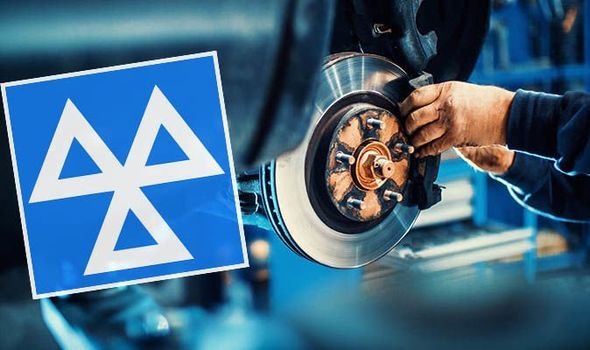
🛑 3. Brakes (10% of failures)
Brake issues are often categorized as “Dangerous,” meaning you cannot drive the car away.
-
The Problem: Worn pads (below 1.5mm), scored discs, or a weak handbrake.
-
The Fix: If your handbrake pulls up too high (clicks 5+ times) or the car pulls to one side when braking, get it checked immediately.
2. The “Silly” Failures (Don’t Get Caught Out!)
These common MOT failures are entirely avoidable and often down to simple driver negligence.
-
Empty Screen Wash: It sounds ridiculous, but thousands of cars fail because the washer bottle is empty. The tester will not fill it for you. Top it up!
-
Dirty Number Plates: If the ANPR camera can’t read your plate, you fail. A quick wipe with a cloth takes 10 seconds.
-
Stickers on the Windscreen: A sat-nav holder or air freshener dangling in the “swept area” of the wipers is a fail for “driver view obstruction.” Remove them before you arrive.
-
Seatbelts: Check that all seatbelts (including the rear ones) click into the buckle and retract fully. If a dog has chewed a belt, it’s a major fail.
3. How to Prevent Common MOT Failures: Your Checklist
To ensure you don’t become a statistic, follow this simple pre-test routine. This “pre-check” is the foundation of our Guaranteed MOT Pass service.
-
Lights: Check all exterior bulbs, including the registration plate lamp.
-
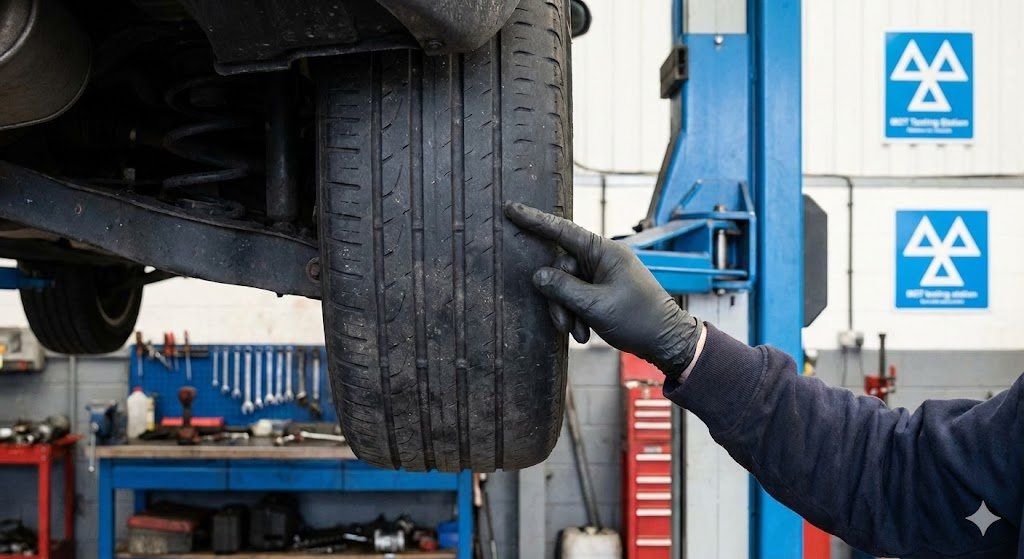
Tyres: Use a 20p coin to check tread depth. If the outer band of the coin is visible, your tyres may be below the 1.6mm limit.
-
Wipers: distinct tears in the rubber? Replace them. Do they smear? Clean them.
-
Dash Lights: Is the Engine Management Light or Airbag light on? This is an automatic fail.
-
Horn: Give it a quick beep. No sound = Fail.
-
Mirrors: Are they cracked or insecure? Tape won’t fix a broken glass mirror for the test; replace the glass.
For a visual version of this checklist, see our “MOT Prep” board on Pinterest.
4. Why 2026 Rules Will Make Failures More Common
As we discussed in our previous post about New MOT Rules 2026, the standards are tightening.
-
Digital Evidence: Testers can no longer be “lenient” on borderline failures because they have to upload photos of the test.
-
Emissions: The smoke test for diesels is stricter. If your DPF (Diesel Particulate Filter) has been tampered with, it is a major fail.
This means preventing common MOT failures is more critical than ever. You cannot rely on a “friendly” tester to let a minor issue slide.
5. Frequently Asked Questions (FAQ)
Here are the most common questions UK drivers ask about failures and retests.
1. What is the most common MOT failure? The single most common failure is lighting and signalling (30%), specifically blown bulbs and headlight aim.
2. Can I drive my car if it fails the MOT? Only if your current MOT certificate is still valid and the failure was not listed as “Dangerous.” If the MOT has expired, you can only drive to a place of repair.
3. Do I have to pay for a retest? If you leave the car at the test centre for repairs, the retest is usually free. If you take it away and return within 10 working days, there is a partial fee.
4. Will a cracked windscreen fail an MOT? It depends on the size and location. A crack larger than 10mm in the driver’s line of sight (Zone A) is a fail. Elsewhere, up to 40mm is allowed.
5. Does a spare tyre need to be legal? No. The spare tyre is not tested during an MOT. However, if you are using it on the car at the time of the test, it must be legal.
6. Can I fail for having a dirty car? Yes. If the car is too dirty to inspect (e.g., thick mud under the wheel arches or a boot full of rubbish preventing access to the spare wheel well), the tester can refuse to test it.
7. Is the engine management light an MOT failure? Yes. A dashboard warning light for a major system (Engine, ABS, Airbag, Power Steering) is a Major fail.
8. How much does an MOT cost in 2025? The maximum fee for a car (Class 4) is £54.85.
9. Can I appeal a failed MOT? Yes. You must complete a VT17 form within 14 days of the test. Do not repair the car before the appeal inspection.
10. How do I fix “Common MOT Failures” cheaply? Do the simple jobs yourself: change wiper blades, top up fluids, and change bulbs. Leave the brakes and suspension to the professionals.
Preparation is the Key
Avoiding common MOT failures doesn’t require a degree in engineering; it just requires ten minutes of attention. By checking your lights, tyres, and fluids before you arrive at the garage, you significantly increase your chances of a first-time pass.
Don’t let a £5 bulb cost you a £54 retest fee. Be proactive, check your car, and drive with confidence.
Want to Guarantee Your Pass? Don’t leave it to chance. Book a Combined Service & MOT with us. We check all these common MOT failures before the official test begins. Get a Quote and secure your slot today.