As we approach the new year, many drivers are asking: what exactly are the new MOT rules 2026 and how will they affect my vehicle?
The rumour mill is spinning with claims that the test frequency is changing or that Electric Vehicles (EVs) will face entirely new inspections. The truth is, the Driver and Vehicle Standards Agency (DVSA) is introducing significant regulatory changes from January 9, 2026, but they are focused more on who tests your car than how it is tested.
In this exclusive guide, we separate the facts from the fiction. We will explain the confirmed new MOT rules 2026, the official rejection of the 4-year test cycle, and the positive tax changes coming for EV owners in April.
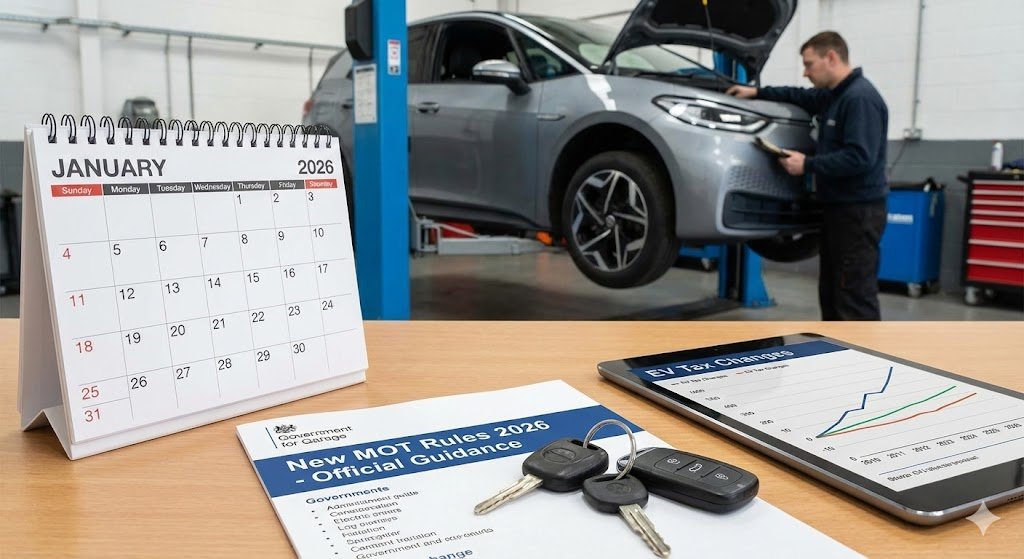
![Image: A calendar turned to January 2026 with a car key and official government guidance documents.] Alt Text: Calendar highlighting the start of new MOT rules 2026 for UK drivers.
Confirmed: The New MOT Rules 2026 (Jan 9 Update)
The most significant confirmed change begins on Friday, January 9, 2026. While this rule primarily affects garages, it has a massive impact on your safety as a consumer.
The “Cessation” Loophole Closed
Under the new MOT rules 2026, the DVSA is enforcing strict new regulations regarding “Cessation” (bans).
-
The Old Rule: Previously, if a mechanic was banned for negligence or fraud, they could sometimes slip into a “management” role at the garage.
-
The New Rule: From 2026, any tester who receives a 2-year or 5-year ban is strictly prohibited from holding any role in the MOT management process.
This ensures that the people responsible for your safety are 100% trustworthy. When you book a test under the new MOT rules 2026, you can be confident that “dodgy” mechanics have been completely removed from the system.
The 4-Year Myth: What Are the New MOT Rules 2026?
You may have read headlines claiming that the government planned to change the date of the first MOT from 3 years to 4 years (known as 4-1-1). This has been officially rejected and is NOT part of the new MOT rules 2026.
The Verdict for 2026
-
First MOT: Remains due on the 3rd anniversary of registration.
-
Frequency: Remains due every 12 months thereafter.
Why did they reject it? Data analyzed during the consultation for the new MOT rules 2026 showed that moving to 4 years would increase the number of dangerous cars on the road. With tyre wear and brake issues common even in 3-year-old cars, keeping the test at 3 years saves lives.
Action: If your car is a “23 plate” (registered in 2023), your first MOT is due in 2026. Do not wait for the 4th year!
![Image: A modern electric vehicle being inspected on a lift in a clean, high-tech garage.] Alt Text: Electric vehicle undergoing safety checks under the new MOT rules 2026.
Electric Vehicles and New MOT Rules 2026
If you drive an electric car, 2026 is a pivotal year. While there is no separate “EV MOT test” yet, there are major tax changes that coincide with the new MOT rules 2026 rollout.
The “Expensive Car Supplement” Change (April 2026)
Currently, cars with a list price over £40,000 pay an extra “luxury tax” supplement. However, the government has adjusted this for zero-emission drivers.
From April 1, 2026:
-
The threshold for Electric Vehicles rises to £50,000.
-
What this means: If you buy a new EV in 2026 costing £48,000, you will no longer pay the luxury tax supplement.
This is a significant financial benefit that sits alongside the new MOT rules 2026, designed to make owning a cleaner vehicle more affordable.
Ghost MOTs and Digital Evidence in 2026
Have you ever seen an ad for “MOTs – No Car Needed”? This is a scam known as a “Ghost MOT,” and the new MOT rules 2026 are designed to destroy it.
The New Digital Standard
To prove a car was actually at the garage, testers must now adhere to stricter evidence guidelines.
-
Live Photos: Testers must increasingly capture live photos of the vehicle in the test bay.
-
AI Analysis: The DVSA is using AI to spot testing patterns. If a tester logs a pass in 10 minutes (when it takes 45), the system flags it immediately.
If you are unsure about what a compliant car should look like under these strict standards, check out our maintenance boards on Pinterest for visual guides on tyre wear and dashboard warning lights.
Preparing for the New MOT Rules 2026
The regulations are tightening, but passing is still easy if you prepare. Here is how to ensure your vehicle complies with the new MOT rules 2026:
1. Don’t Ignore Warning Lights Under the stricter 2026 guidance, a dashboard warning light for safety systems (Airbag, ABS, ESC) is a guaranteed fail. 2. Check Your Tyres (Especially EVs) With the average car weight increasing, tyre wear is the #1 failure reason. The new MOT rules 2026 place heavy emphasis on “inner edge” wear, which is common on heavy electric vehicles. 3. Book Early With the number of cars on the road increasing, test slots in 2026 will be in high demand.
Conclusion: Trust is Everything
The new MOT rules 2026 are designed to do one thing: remove unsafe cars and dishonest mechanics from UK roads.
While the test isn’t changing to a “4-year” cycle, the standards for who tests your car are higher than ever. At our centre, we welcome these changes. We have always operated with 100% transparency, full digital logging, and honest reporting.
Is Your MOT Due in 2026? Beat the rush and ensure your car meets the latest standards. Get a Quote for a compliant, thorough, and Guaranteed MOT Pass service today.