The final hurdle before getting your full UK driving licence is the practical driving test. While hours of practice focus on manoeuvres and road rules, many candidates overlook a crucial element that can lead to an instant cancellation or failure: the vehicle itself. Driving test vehicle checks are non-negotiable and essential for test day success.
The car you use for your driving test must meet strict legal and procedural requirements. From its insurance and documentation to the physical presence of an extra mirror, failing to tick all the boxes before you arrive can lead to an abrupt end to your test before you even start the engine. This complete guide breaks down every check, requirement, and preparation step, ensuring your vehicle is absolutely problem-free and ready to pass inspection by the examiner. Mastering these driving test vehicle checks is essential for success.
Part 1: Mandatory Legal & Paperwork Checks for the Exam
Before the examiner even looks at the car’s tyres, they will confirm that the documentation and legal status of the vehicle are impeccable. These items are non-negotiable for passing the practical test vehicle check.
1. Insurance and Documentation Status
The car must be properly insured for you to drive it during the practical test.
-
If using a Driving School Car: Your instructor will have the appropriate commercial insurance policy.
-
If using your Own Car (or a friend/relative’s): You must have valid car insurance that specifically covers a learner driver taking the practical driving test. You must be able to prove this if requested. [Outbound Link 1: Link to GOV.UK/insurance-test-car]
2. Valid Tax, MOT, and No Warning Lights
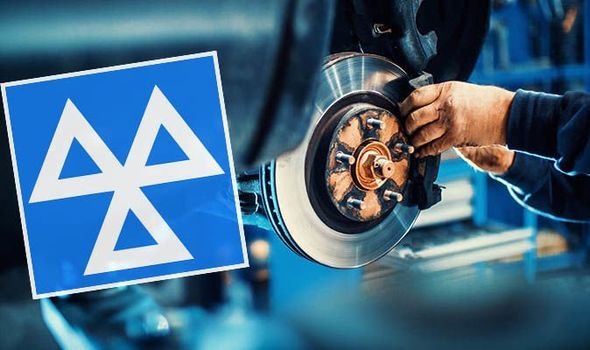
The vehicle must be correctly taxed and, if over three years old, have a current, valid MOT certificate. Furthermore, the car must not display any warning lights related to key safety components (Engine, ABS, Airbag). Any major safety light will result in test cancellation.
Part 2: Essential Physical Requirements for the Examiner
The car must be equipped to allow the examiner to carry out their job safely and effectively. This section focuses on mandatory equipment crucial to the driving test vehicle checks.
3. Interior Setup and Safety Restraints
The car must be reasonably clean inside and out. Crucially, the examiner must have a working head restraint on the front passenger seat. All seat belts must be fully functional.
4. Visibility Aids and L-Plates
The examiner must have an interior mirror (or a functioning external equivalent) that allows them to see behind the vehicle—a key part of the driving test car preparation.
-
L-Plates: Clearly visible L-plates must be securely attached to the front and back.
-
Extra Mirror: The essential extra mirror for the examiner must be fixed. This is a common reason for test cancellations if forgotten.
5. Confirming All External Lights Work
The examiner will check all exterior lights as part of the initial vehicle inspection: Headlights, Indicators, Brake lights, Reversing lights, Fog lights, and Hazard warning lights.
Part 3: Critical Safety Condition Checks
These are the physical parts of the car that must meet safety standards—the final criteria of the driving test vehicle checks that ensure the car is safe to be on the road.
6. Tyre and Braking System Standards
This is a critical safety check that is rigorously inspected. Tyres must have a minimum tread depth of 1.6mm. The brake pedal must feel firm, and the Parking Brake must hold the car securely.
7. Wipers, Washers, Speedometer, and Horn
The wipers must clear the windscreen effectively, and the washer jets must spray water correctly. The speedometer and the horn must also be fully operational. [Outbound Link 2: Link to an external article on the Highway Code or vehicle laws]
📅 The Final Checklist: Completing Your Driving Test Vehicle Checks
To ensure your driving test vehicle checks are complete, use this final preparation list the day before your exam:
| Area | Check Item | Status (Y/N) |
| Legal | Valid Insurance for Test? | |
| Legal | Taxed & MOT’d (if applicable)? | |
| Safety | No Major Warning Lights (Engine, ABS, Airbag)? | |
| Exterior | L-Plates securely attached? | |
| Exterior | Tyres (Tread > 1.6mm, correct pressure)? | |
| Exterior | All Lights (Head, Brake, Indicators, Fog) working? | |
| Interior | Examiner’s Extra Interior Mirror fixed? | |
| Interior | Passenger Head Restraint fixed and secured? | |
| Interior | Screenwash topped up, Wipers working? | |
| Interior | Car is clean and clutter-free? |
By dedicating 30 minutes to these essential practical test vehicle checks, you remove one of the major variables, allowing you to focus completely on your driving and secure your licence.
Focus on the Driving
Your instructor or supervising driver should always perform these driving test vehicle checks with you, but ultimately, the responsibility for ensuring the car is ready rests with the candidate. By thoroughly completing all the car requirements outlined above, you ensure the car itself is faultless, allowing the examiner to focus solely on your performance. Good luck!
🚗 MOT UK History: How to Access Full MOT Records for Any Vehicle
DVLA MOT Check: How to Use the Official DVLA Service to Check MOT History
DVLA MOT Check How to Use the Official DVLA Service to Check MOT History